
Choosing the right marketing strategy is one of the most important decisions for any business. Understanding Traditional Marketing vs Digital Marketing helps you decide which approach can effectively reach your target audience and support your business goals. While traditional marketing uses offline channels such as newspapers, television, radio, and billboards, digital marketing focuses on online platforms like search engines, social media, email, and websites.
When comparing Traditional Marketing vs Digital Marketing, it is important to consider factors such as cost, audience reach, targeting, flexibility, and return on investment. Traditional marketing can be a strong choice for local promotions and brand awareness, whereas digital marketing provides better audience targeting, real-time performance tracking, and the ability to reach customers across the world.
Every business has different needs, so there is no one-size-fits-all solution. Some businesses achieve better results with traditional methods, while others grow faster through digital channels. In many cases, using both approaches together creates a more balanced and effective marketing strategy.
This guide explains Traditional Marketing vs Digital Marketing in simple terms, highlights the key differences, and helps you understand which method is best for your business. By understanding Traditional Marketing vs Digital Marketing, you can make smarter marketing decisions and build a stronger presence in 2026.
Traditional Marketing vs Digital Marketing I Origin8Marketing
Introduction
Marketing has always played a vital role in helping businesses grow, attract customers, and build a strong brand. Whether you want to sell a product, promote a service, or increase brand awareness, choosing the right marketing strategy is essential. Over the years, the way businesses market themselves has changed dramatically. In the past, companies relied on newspapers, television, radio, magazines, billboards, brochures, and flyers to reach potential customers. Today, digital platforms such as Google, Instagram, Facebook, YouTube, and LinkedIn have transformed how businesses connect with their audience.
This shift has led to one of the most common questions business owners ask: Traditional Marketing vs Digital Marketing, which approach is better? Understanding Traditional Marketing vs Digital Marketing is important because both methods offer unique advantages and can help businesses achieve different goals.
Traditional marketing is often effective for local promotions and reaching audiences through offline channels. On the other hand, digital marketing allows businesses to reach a larger audience, target specific customer groups, and measure campaign performance in real time. When comparing Traditional Marketing vs Digital Marketing, factors such as cost, audience reach, flexibility, and return on investment all play an important role.
Choosing between Traditional Marketing vs Digital Marketing depends on your business objectives, target audience, and available budget. Some businesses benefit more from offline advertising, while others see better results through search engines, social media, and online campaigns. In many cases, combining both approaches creates a stronger and more effective marketing strategy.
In this guide, we’ll explore Traditional Marketing vs Digital Marketing in detail, compare their key differences, discuss their advantages and disadvantages, and explain when each approach works best. By the end of this article, you’ll have a clear understanding of Traditional Marketing vs Digital Marketing and be able to choose the right strategy to grow your business in 2026 and beyond.
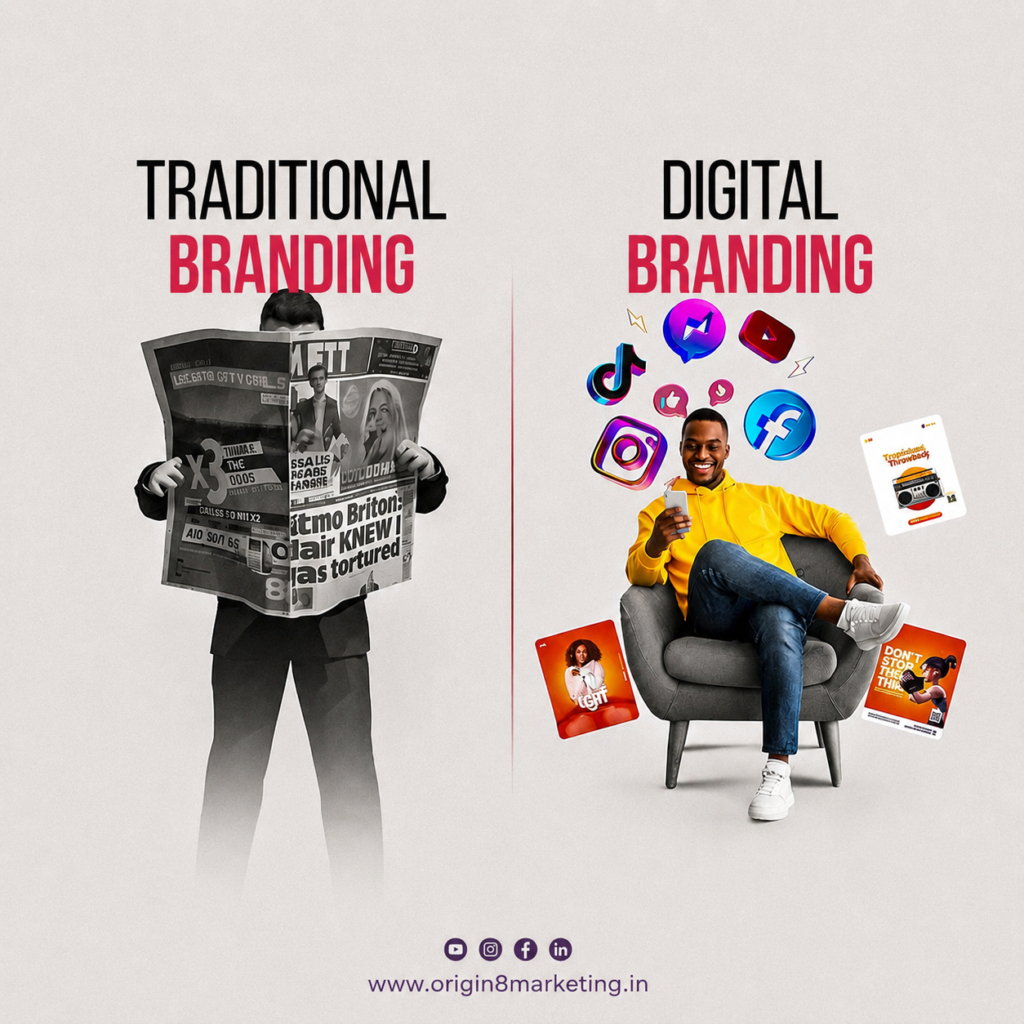
What Is Traditional Marketing?
Traditional marketing is a promotional strategy that targets audiences using offline materials. Marketers may use traditional marketing to interact with consumers in physical locations. They typically insert these marketing materials in places where their audience is more likely to see, hear or interact with them. Examples of traditional marketing are radio and television commercials, billboards and direct mail campaigns.
Common Examples of Traditional Marketing
- Newspapers
- Magazines
- Television
- Radio
- Billboards
- Flyers
- Brochures
Advantages of Traditional Marketing
Here are some of the advantages of using traditional marketing methods:
- Audience growth: Options like TV, radio and billboards can reach consumers in new markets and diverse geographic locations. More localised efforts such as flyers, direct mail and print ads can also engage consumers in a specific geographic area.
- Reusable materials: Companies can often reuse the same flyers, TV ads or radio ads, such as an advertisement that runs every year during a specific holiday season. This way, they can save time and money while still promoting the business.
- Credibility: Consumers associate traditional marketing with larger company budgets, which signals a brand’s longevity, growth potential and financial stability. Consumers may be more willing to purchase from companies that they associate with these qualities.
- Brand exposure: A multimedia traditional marketing campaign is a great opportunity to improve brand recall among consumers and increase familiarity with the company’s mission, values and products.
- Trustworthiness: Certain consumers might view traditional marketing methods as more trustworthy if they have less experience with online platforms.
Limitations of Traditional Marketing
Here are some of the limitations of using traditional marketing methods:
- High Cost: Traditional marketing can be expensive because businesses have to pay for printing, TV ads, newspapers, radio, or billboards. Choosing the right audience helps reduce unnecessary spending.
- Hard to Measure Results: It is difficult to know how many people saw the ad or took action. Businesses often measure success by checking sales or the number of new customers.
- Limited Audience Targeting: Traditional marketing usually reaches a broad audience instead of specific groups. This means many people who see the ad may not be interested.
- Difficult to Update: Once an ad is printed or published, changing it takes time and costs more money. Businesses usually create ads that stay useful for a long time.
- Environmental Impact: Printed materials like flyers, brochures, and posters can create waste. Using recycled paper and eco-friendly materials can help reduce this impact.
What Is Digital Marketing?
Digital marketing is the process of promoting products, services, or brands through online channels such as websites, search engines, social media, email, and digital advertisements. It helps businesses connect with their target audience, increase brand awareness, generate leads, and drive sales. Popular digital marketing strategies include Search Engine Optimisation (SEO), Social Media Marketing (SMM), Content Marketing, Email Marketing, and Pay-Per-Click (PPC) advertising. Unlike traditional marketing, digital marketing allows businesses to track campaign performance, measure results in real time, and target specific audiences. It is cost-effective, data-driven, and essential for businesses looking to grow in today’s digital world.
Common Examples of Traditional Marketing
- Search Engine Optimization (SEO)
- Social Media Marketing (SMM)
- Content Marketing
- Email Marketing
- Pay-Per-Click (PPC)
- Advertising Influencer Marketing
- Video Marketing
- Affiliate Marketing
- Display Advertising
- SMS & WhatsApp Marketing
Advantages of Digital Marketing
- Cost-Effective: Digital marketing allows businesses to promote their products and services at a lower cost than traditional marketing, making it suitable for businesses of all sizes.
- Global Reach: Businesses can connect with customers worldwide through websites, social media, and search engines without geographical limitations.
- Targeted Audience: Marketers can reach specific audiences based on factors like age, location, interests, and online behaviour, improving campaign effectiveness.
- Measurable Results: Digital marketing tools provide real-time data on clicks, traffic, conversions, and customer engagement, making it easy to measure performance.
- Higher Engagement: Businesses can interact directly with customers through comments, messages, emails, and social media, building stronger relationships.
- Easy to Update: Online campaigns can be edited, paused, or optimised instantly, allowing businesses to respond quickly to market changes.
Limitations of Digital Marketing
- High Competition: Since many businesses market online, standing out from competitors can be challenging.
- Technical Knowledge: Successful digital marketing requires skills in SEO, advertising, analytics, and content creation.
- Privacy Concerns: Collecting customer data must follow privacy laws, and data breaches can reduce customer trust.
- Algorithm Changes: Search engines and social media platforms frequently update their algorithms, which can affect campaign performance.
- Time-Consuming: Building organic traffic and maintaining digital marketing campaigns requires consistent effort and regular updates.
- Negative Feedback: Online reviews and social media comments can spread quickly, potentially affecting a brand’s reputation.
Traditional Marketing vs Digital Marketing: Key Differences
Cost
Traditional marketing often requires a larger investment because it includes expenses such as newspaper advertisements, television commercials, radio promotions, billboards, and printed materials. These methods can be effective but are usually expensive for small businesses. Digital marketing offers more flexibility, allowing businesses to start with a smaller budget. Whether it’s social media marketing, SEO, or email marketing, companies can choose campaigns that fit their budget and gradually increase spending as they grow.
Audience Reach
Traditional marketing mainly targets people within a specific geographic area. For example, a newspaper advertisement is usually seen only by readers in that region. Digital marketing has a much wider reach. A business can promote its products or services to customers across different cities, countries, or even worldwide using search engines, social media, and online advertising.
Targeting
One of the biggest advantages of digital marketing is precise audience targeting. Businesses can show advertisements based on age, interests, location, online behaviour, and purchasing habits. Traditional marketing usually reaches a broad audience without giving businesses much control over who sees their advertisements. This makes digital marketing more effective for reaching potential customers.
Measuring Results
Traditional marketing makes it difficult to know how many people actually responded to an advertisement. Businesses often rely on estimates or customer feedback. Digital marketing provides detailed analytics, allowing businesses to measure website traffic, clicks, impressions, conversions, and customer engagement in real time. These insights help improve future marketing campaigns.
Customer Engagement
Traditional marketing mostly involves one-way communication where businesses deliver their message without immediate interaction. Digital marketing encourages two-way communication through comments, direct messages, reviews, emails, and social media interactions. This helps businesses build stronger relationships and trust with their audience.
Flexibility
Changing a printed newspaper advertisement or billboard after it has been published can be expensive and time-consuming. Digital marketing campaigns can be updated instantly. Businesses can edit advertisements, change content, adjust budgets, or target different audiences within minutes, making digital marketing far more flexible.
Speed
Traditional marketing campaigns often take days or weeks to prepare and launch because they involve printing, broadcasting, or physical distribution. Digital marketing campaigns can go live within minutes. This allows businesses to respond quickly to market trends, seasonal events, or customer demands.
Return on Investment (ROI)
Return on Investment measures how much value a business receives from its marketing efforts. Because digital marketing provides better targeting, detailed tracking, and budget flexibility, it often delivers a higher ROI, especially for small and medium-sized businesses. Traditional marketing can still generate strong results, particularly for local campaigns and brand awareness, but measuring its overall effectiveness is generally more challenging.
Which Marketing Strategy Is Better for Small Businesses?
For most small businesses, digital marketing is the better option because it is affordable, flexible, and easy to measure. It allows businesses to reach the right audience through social media, search engines, and online ads while tracking real-time results like clicks and conversions.
However, traditional marketing still helps with local reach through flyers, newspapers, and events. The best strategy is often a mix of both, using traditional methods for local awareness and digital marketing for wider growth.
What is the difference between traditional marketing and digital marketing?
The main difference between traditional and digital marketing lies in how businesses reach their audience. Traditional marketing uses offline channels such as newspapers, magazines, television, radio, billboards, and flyers to promote products or services. Digital marketing uses online platforms such as search engines, websites, social media, email, and online advertising. Traditional marketing is effective for local brand awareness but offers limited targeting and tracking. Digital marketing provides wider reach, better audience targeting, real-time performance tracking, and greater flexibility. Choosing the right approach depends on your business goals, target audience, and marketing budget.
Is digital marketing better than traditional marketing?
Digital marketing is often a better choice for businesses because it is cost-effective, measurable, and reaches a wider audience. It allows businesses to target specific customers and track campaign performance in real time. However, traditional marketing still has value, especially for local businesses and offline promotions. The best approach depends on your business goals, target audience, and budget. In many cases, combining both strategies delivers the best results.
Can small businesses use both?
Yes, small businesses can benefit from using both traditional and digital marketing. Traditional methods like flyers, local newspapers, and events help build awareness in the community, while digital marketing reaches a wider audience through websites, social media, SEO, and online advertising. Combining both strategies creates a balanced marketing approach, helping businesses increase visibility, attract more customers, and achieve better long-term growth.
Which marketing method is more affordable?
Digital marketing is generally more affordable than traditional marketing, making it a popular choice for small businesses and startups. Businesses can start with a limited budget and adjust their campaigns based on performance. Traditional marketing methods, such as television, newspapers, and billboards, usually require a higher investment. While both methods can be effective, digital marketing offers greater flexibility, better targeting, and measurable results at a lower cost.
Which marketing strategy gives faster results?
Digital marketing generally delivers faster results because campaigns can be launched instantly and performance can be tracked in real time. Paid advertising, social media promotions, and email marketing can start generating traffic and leads within hours or days. Traditional marketing usually takes longer due to printing, distribution, or broadcasting schedules. However, the speed of results ultimately depends on your campaign goals, target audience, and overall marketing strategy.
